There’s a quote attributed to Woody Allen, that goes,
If you want to make God laugh, tell him about your plans.
Well, I think the gods must be having a good old giggle over me this week.
At the beginning of October, I (rashly as it turns out), declared my intention to draw trees every day of the month. I also promised a friend, that we’d have our long-delayed coffee and cake get together at the end of last week.
Well, you can guess can’t you, within hours of making those two simple plans, things started to go pear-shaped.
In the last two weeks, I’ve had two daughters laid up in bed with grotty colds, one husband laid up with man-flu, a nasty cold myself (not that that was allowed to get in the way…), and just as things looked like picking up, my coffee and cake friend’s daughter came down with the same bug. So, not much drawing, and no coffee and cake.
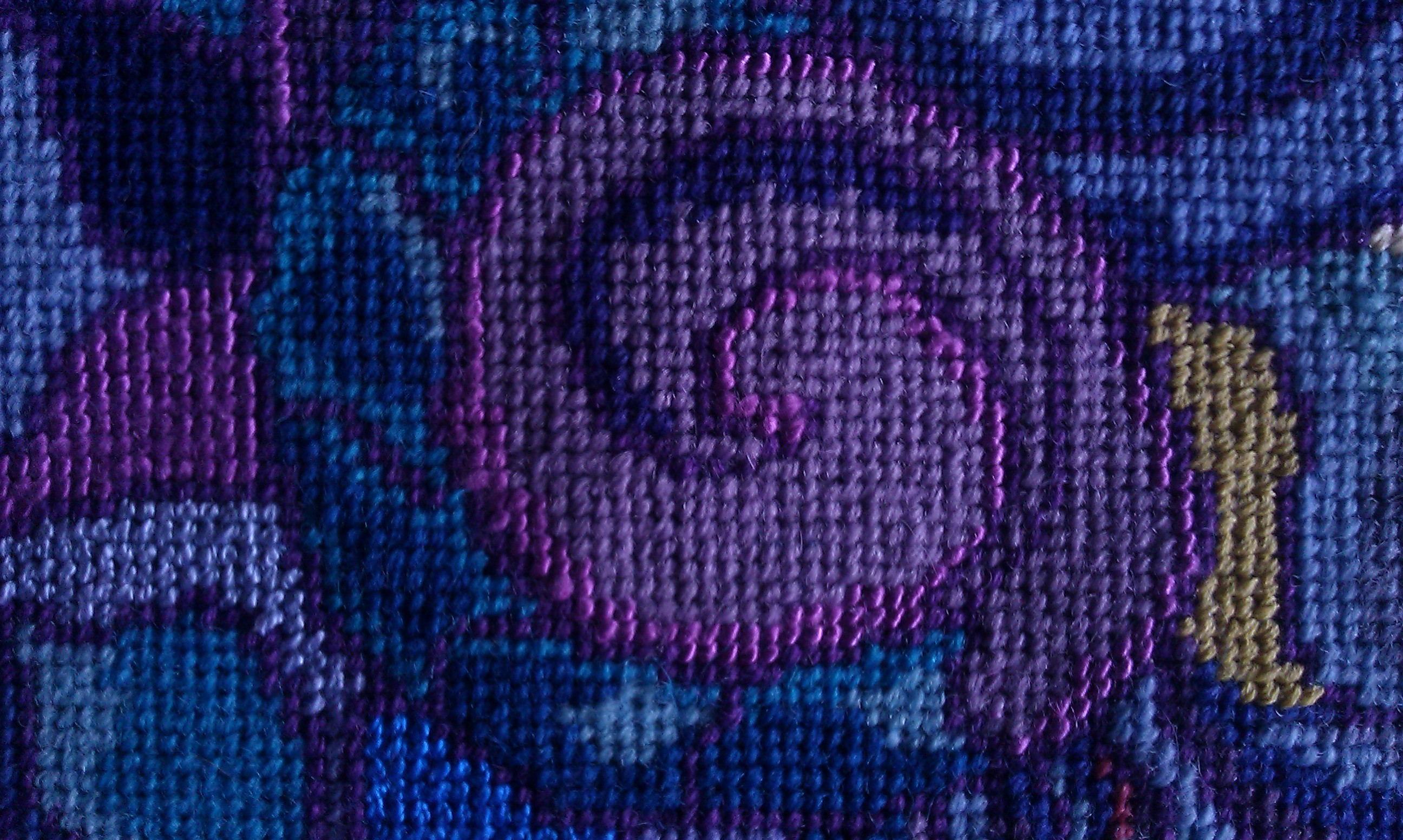
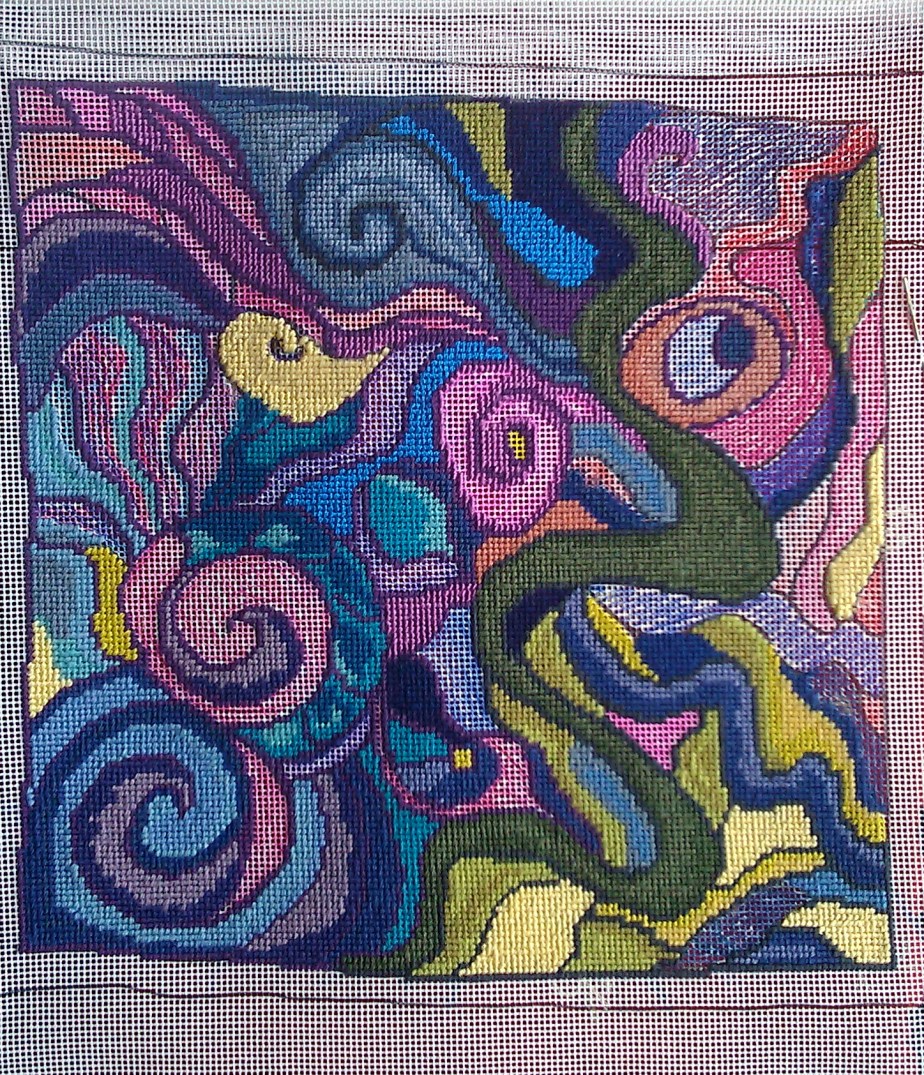
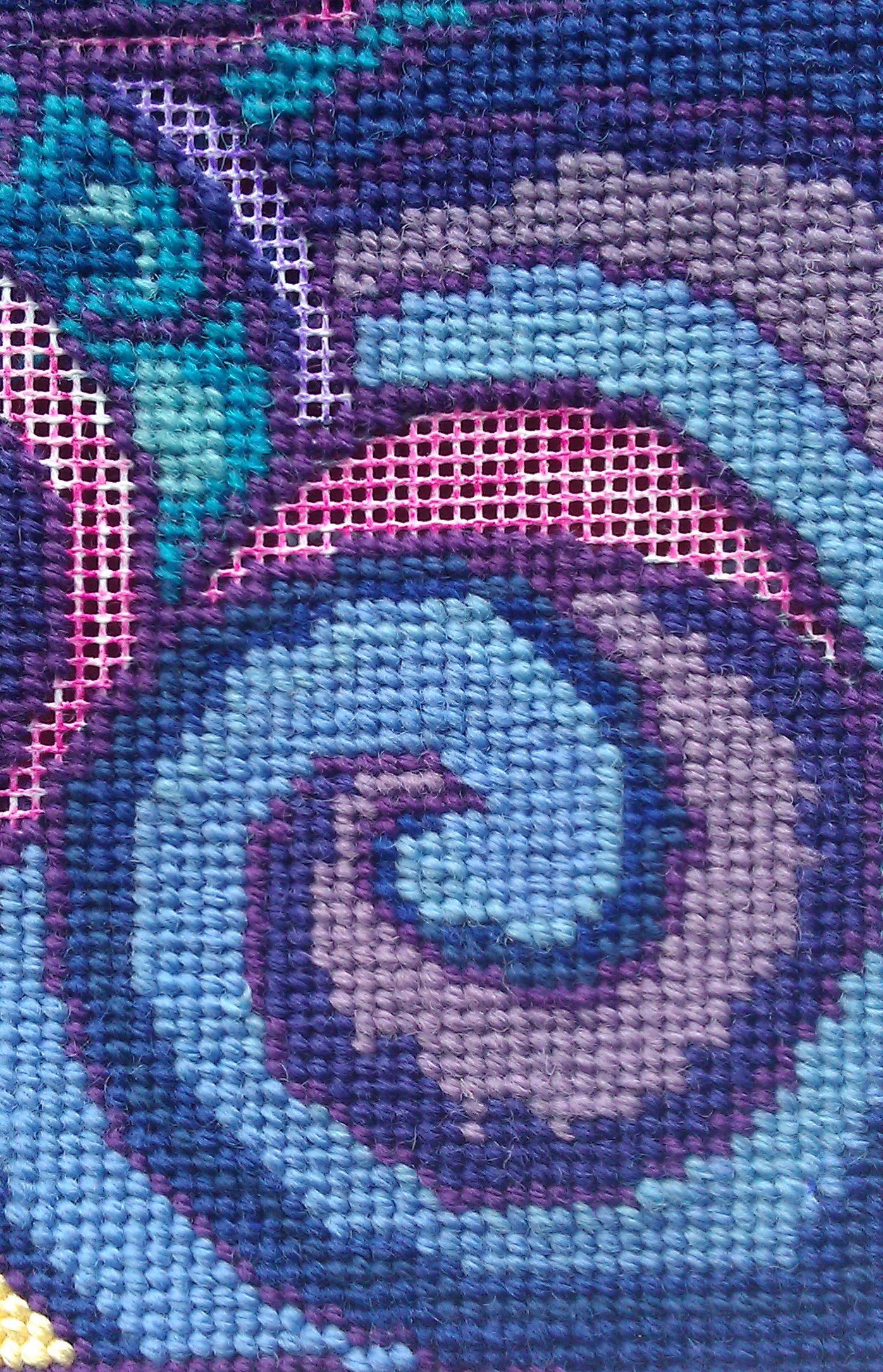
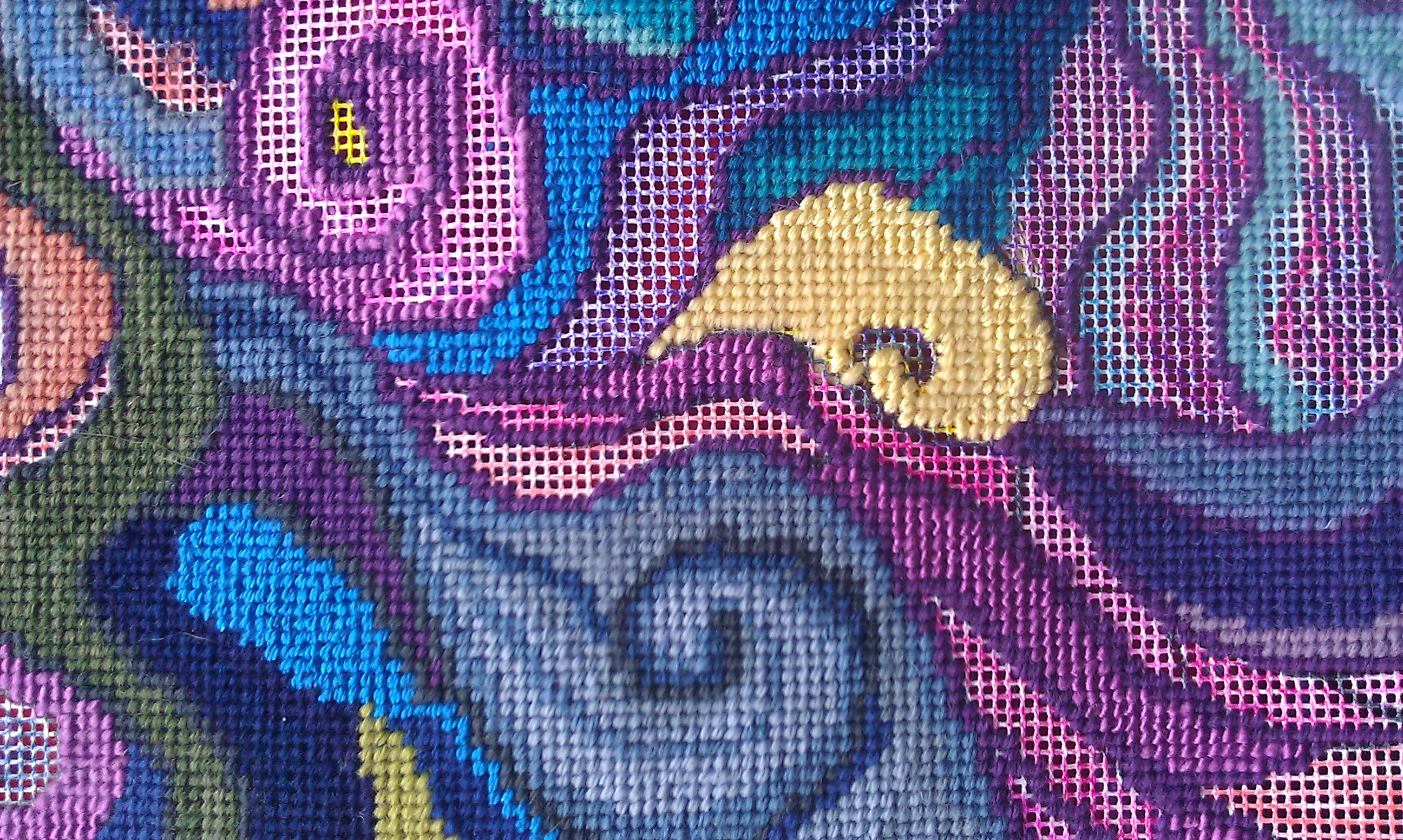
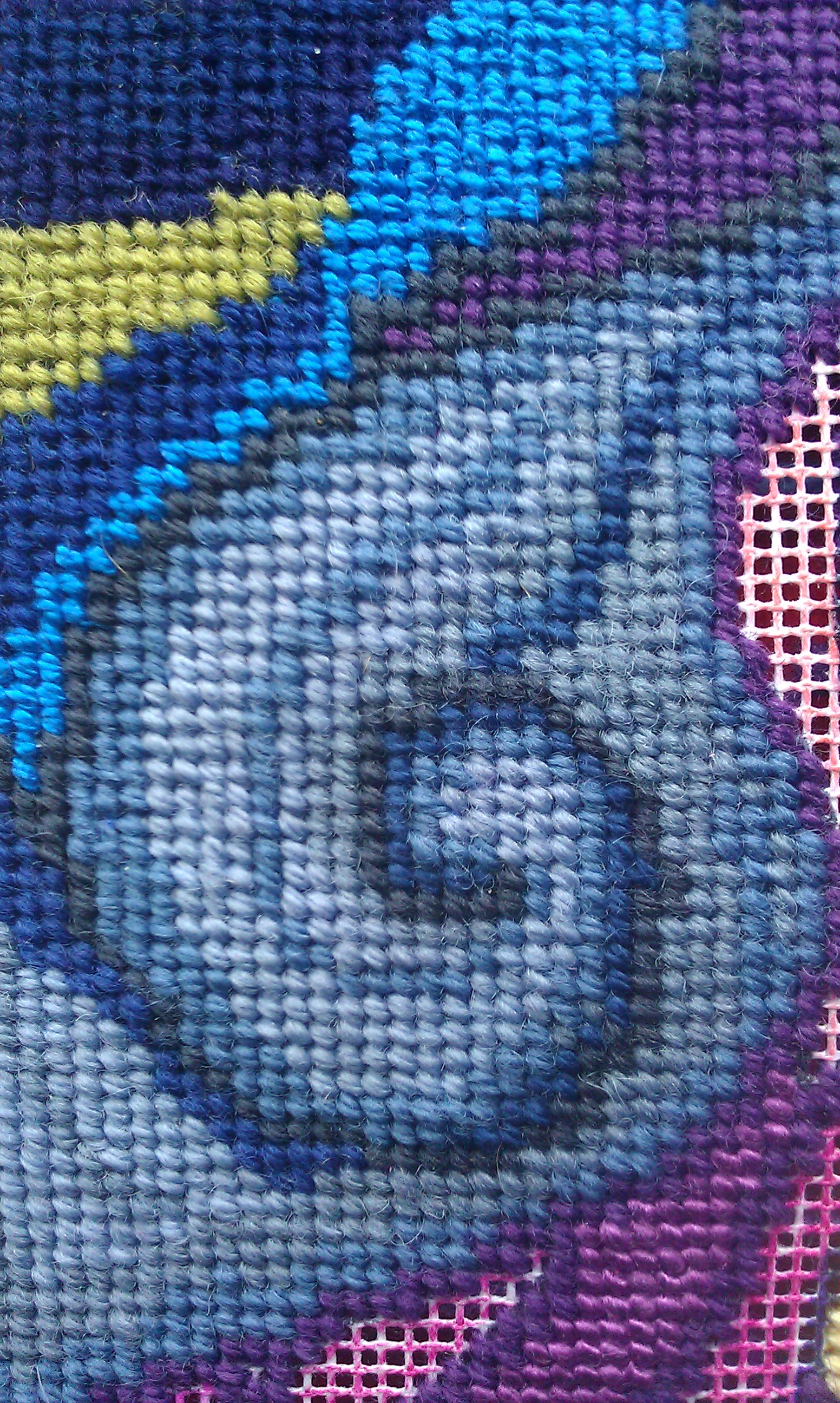
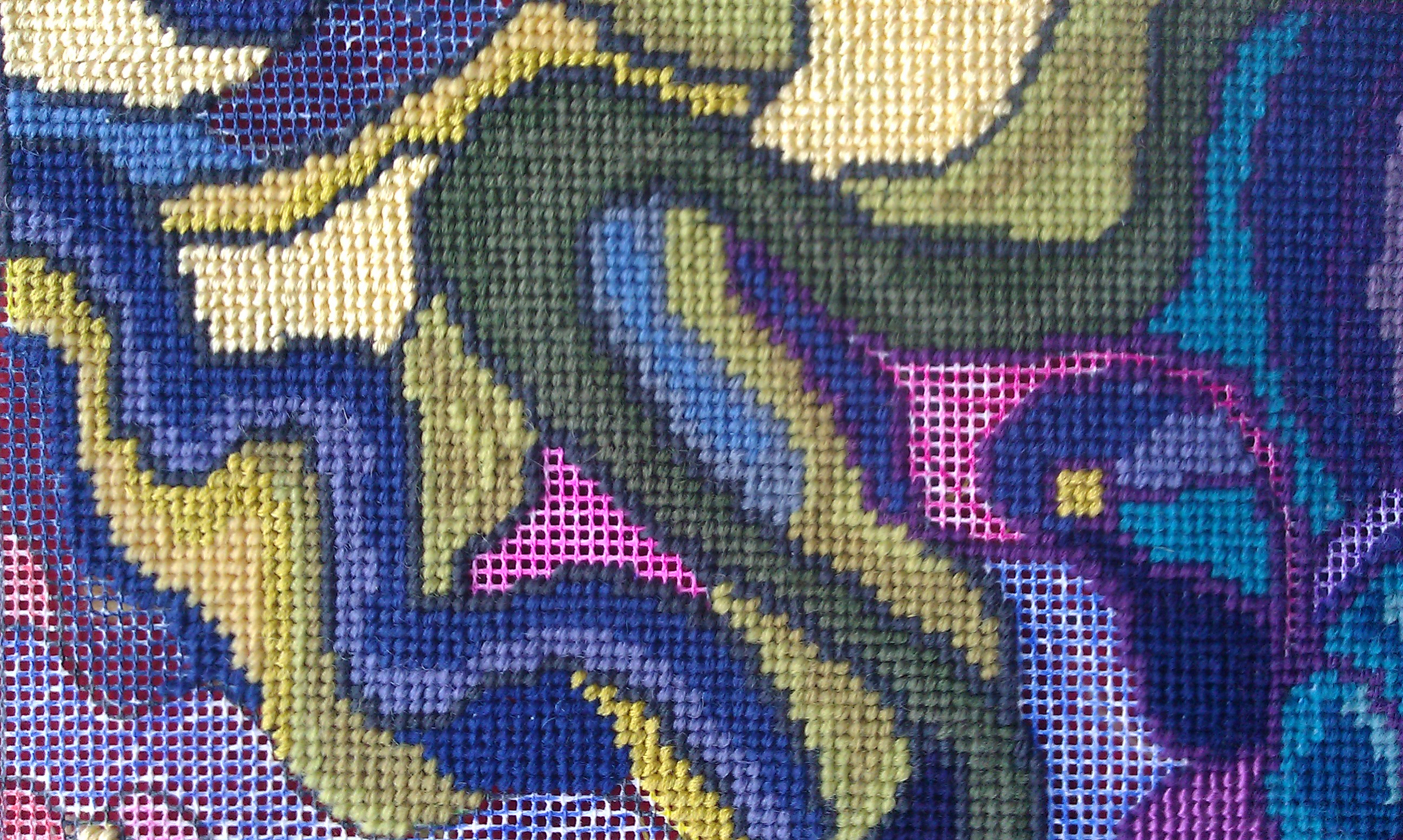
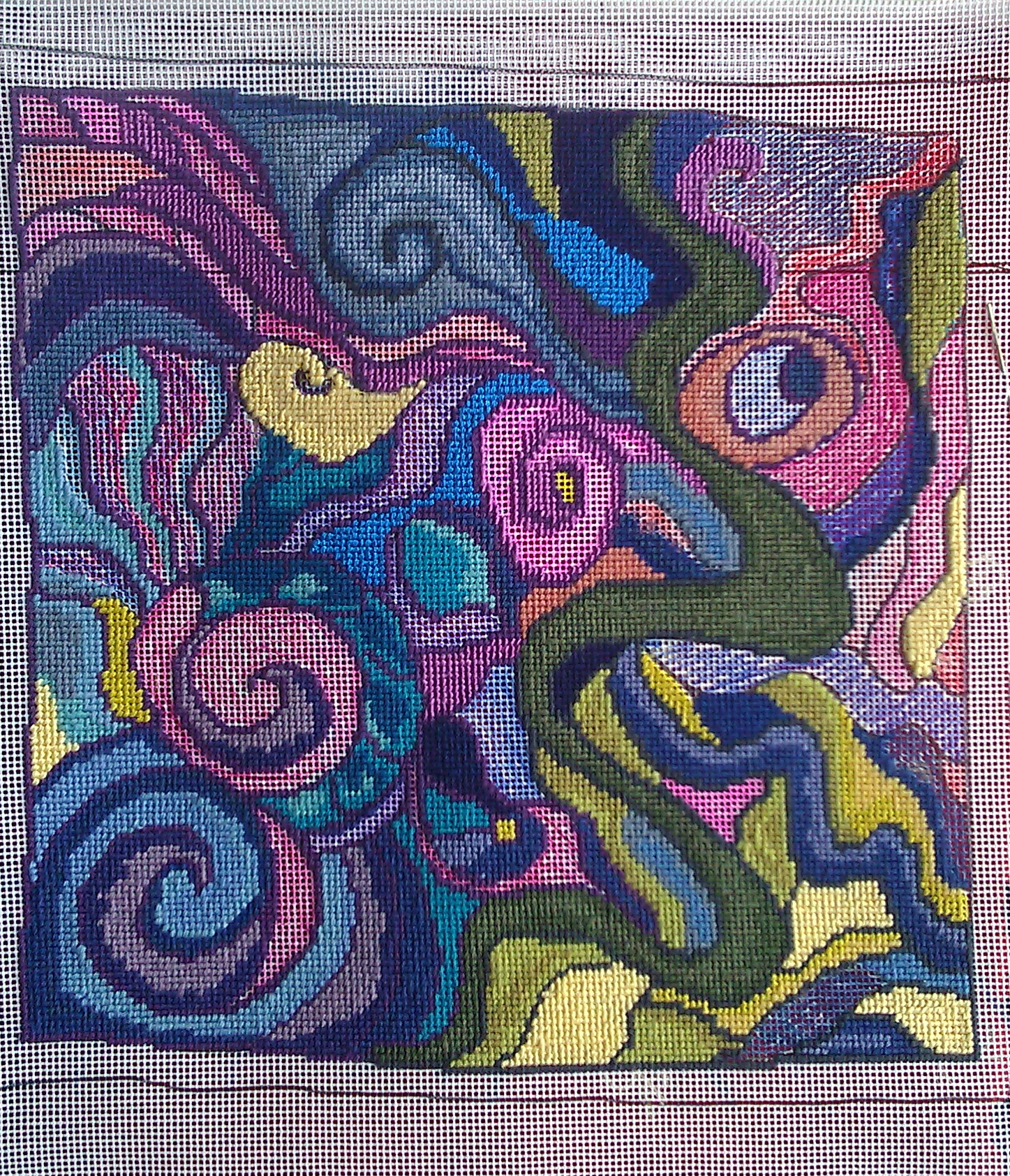
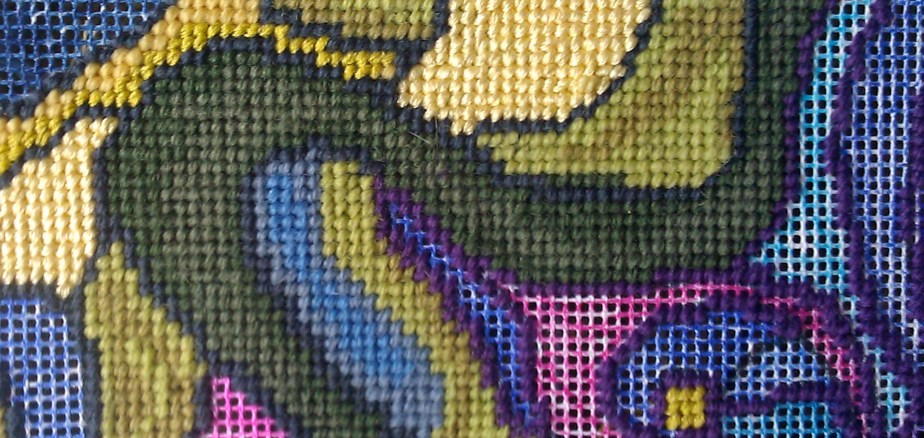
I haven’t been entirely lacking in the tree department, but that will be the subject of another post. This is just to say that with all the additional time sitting around with sickies, I’ve managed to finish the needlepoint I started on the linen scrim.
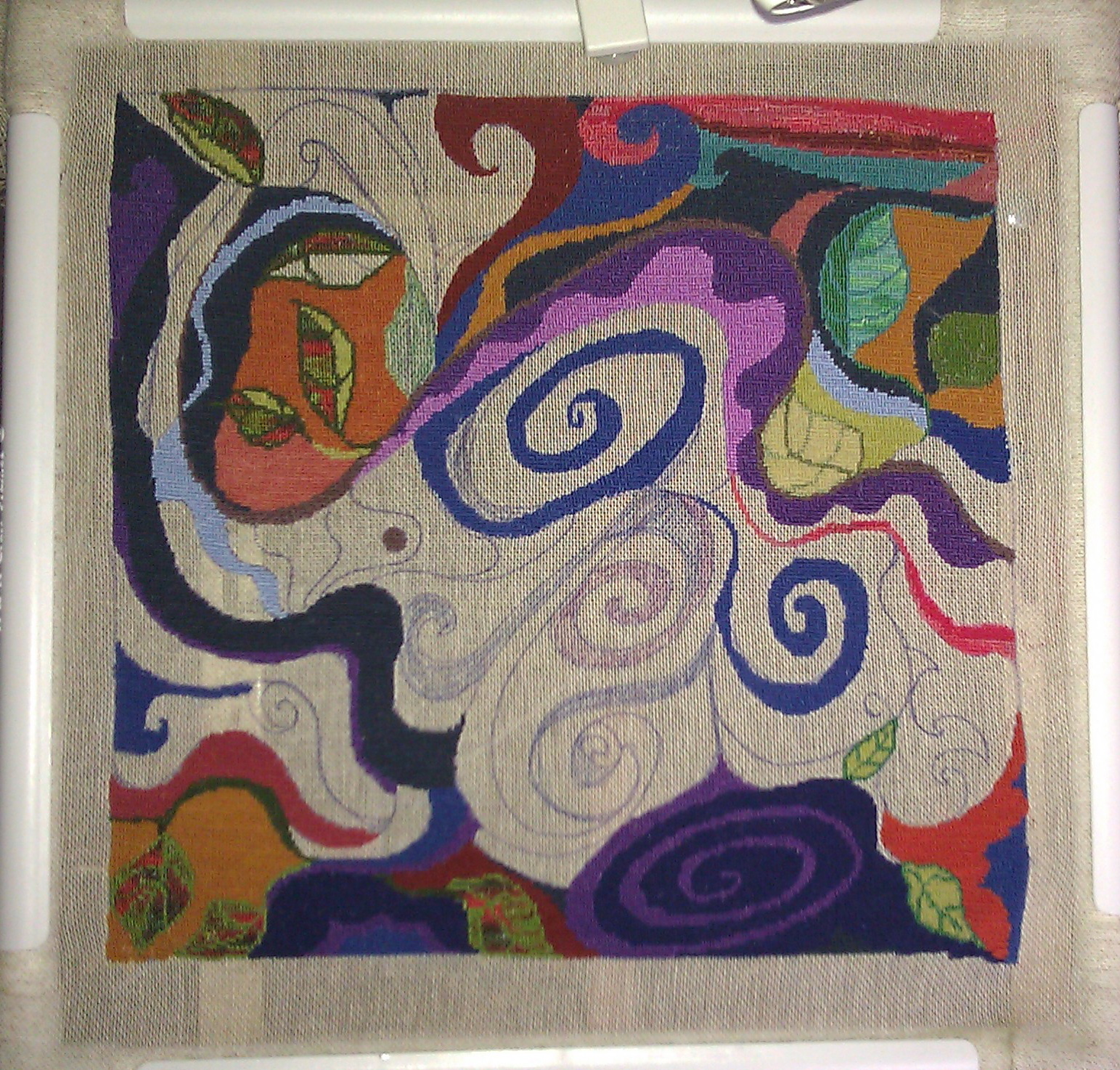
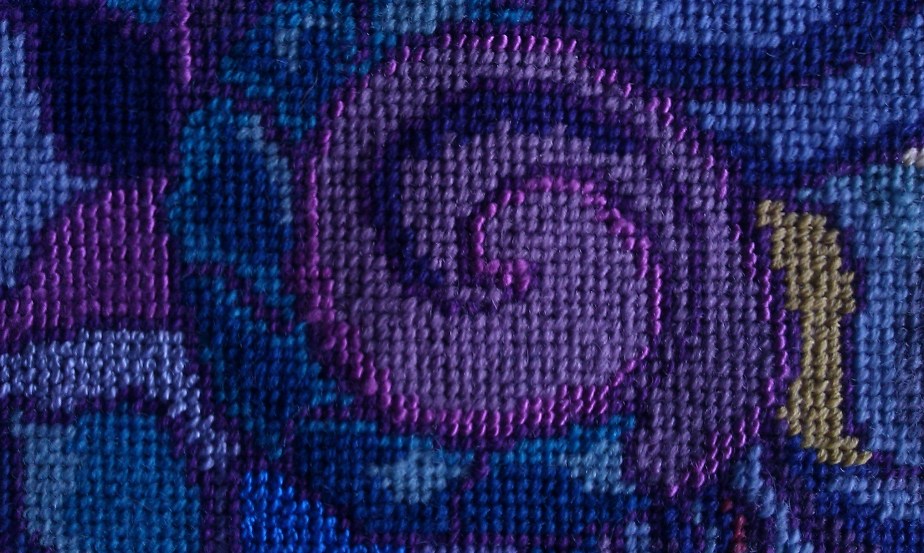
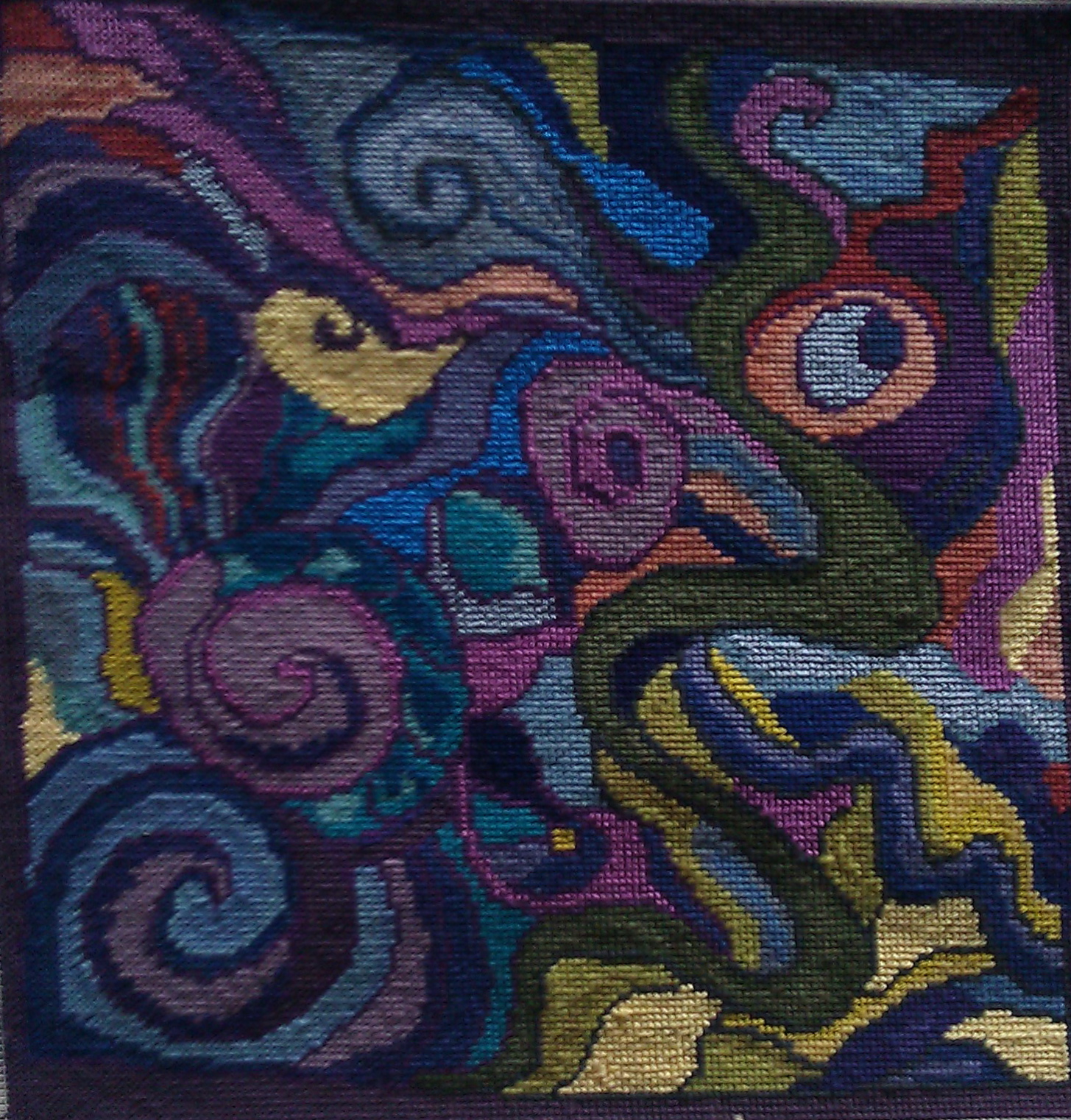
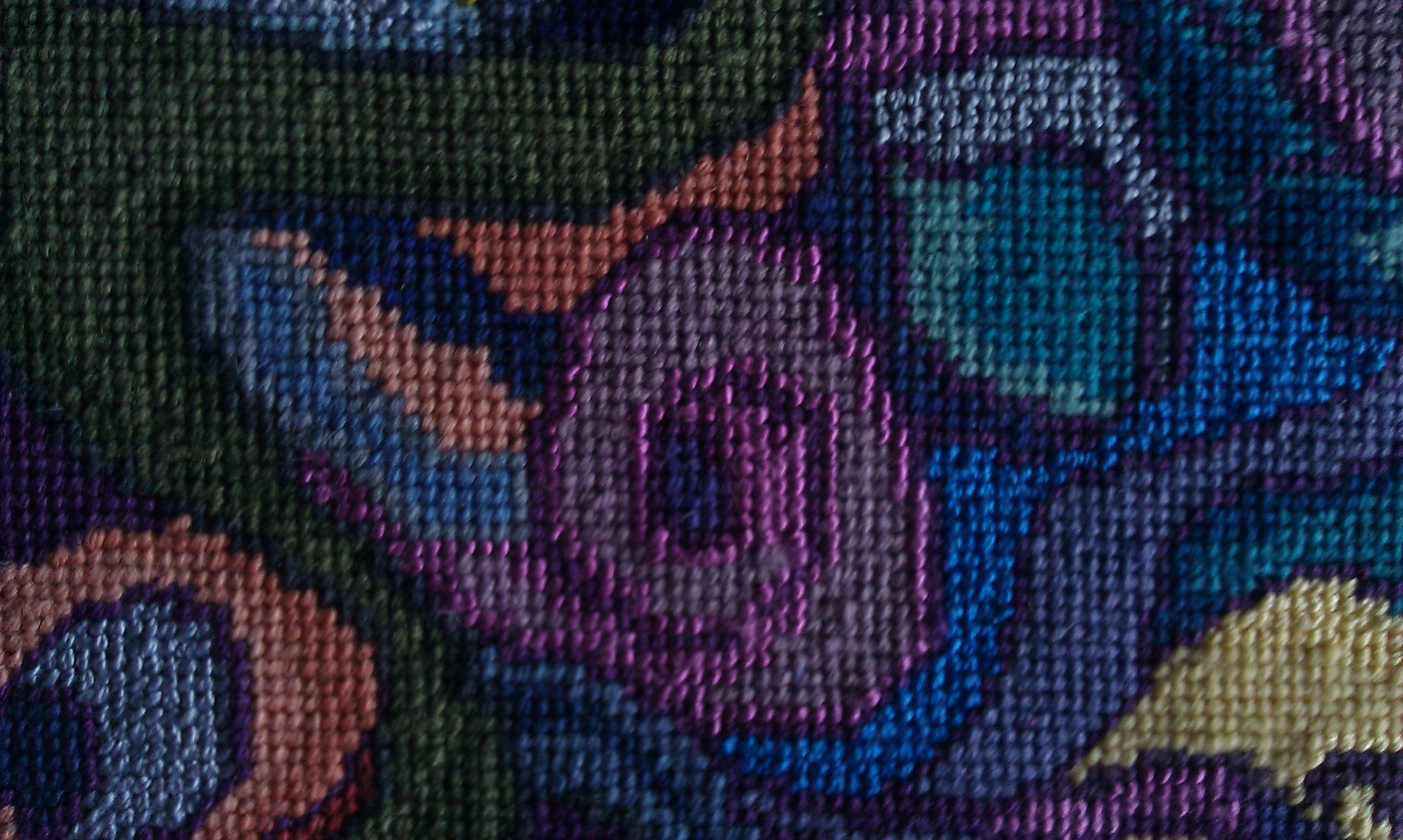
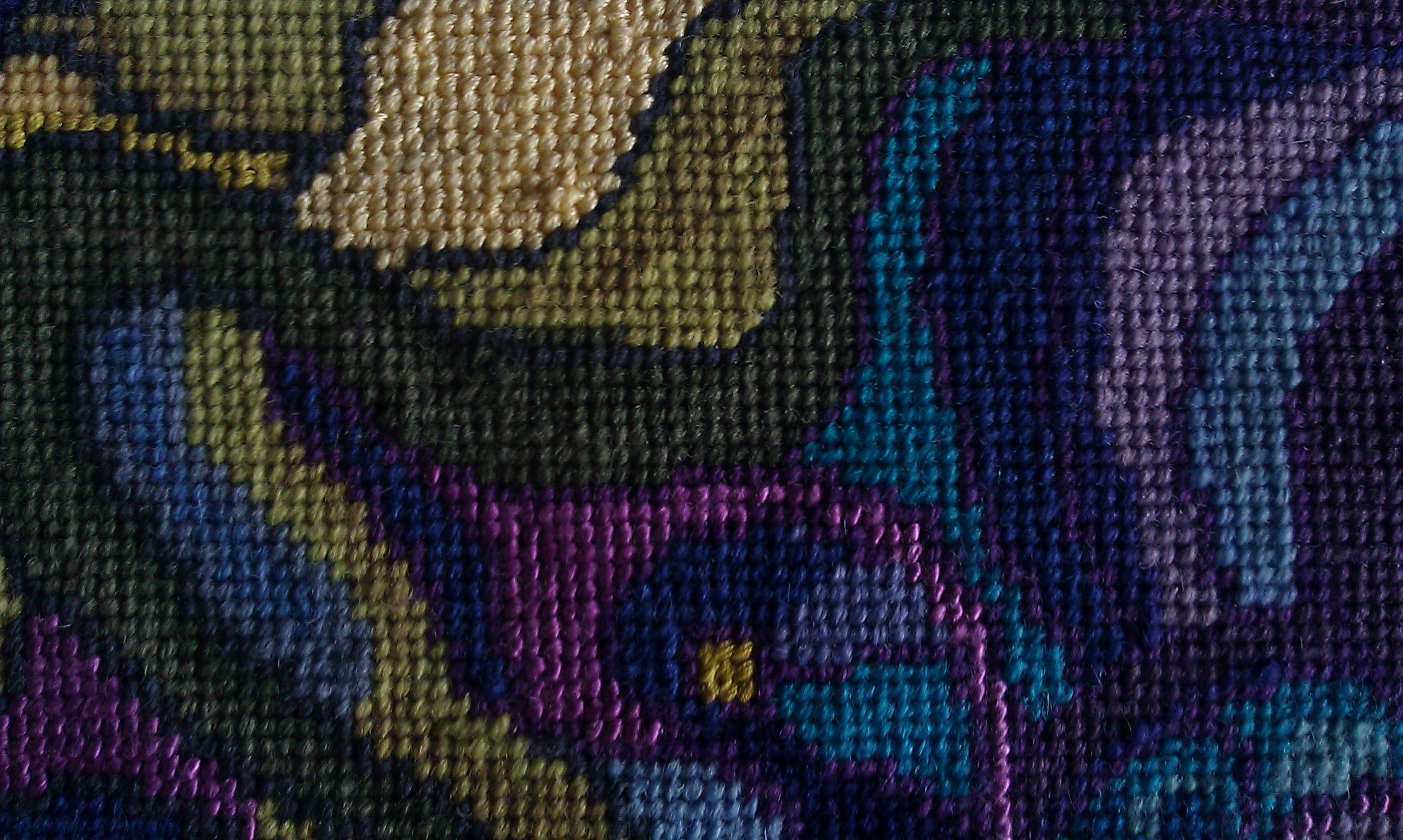
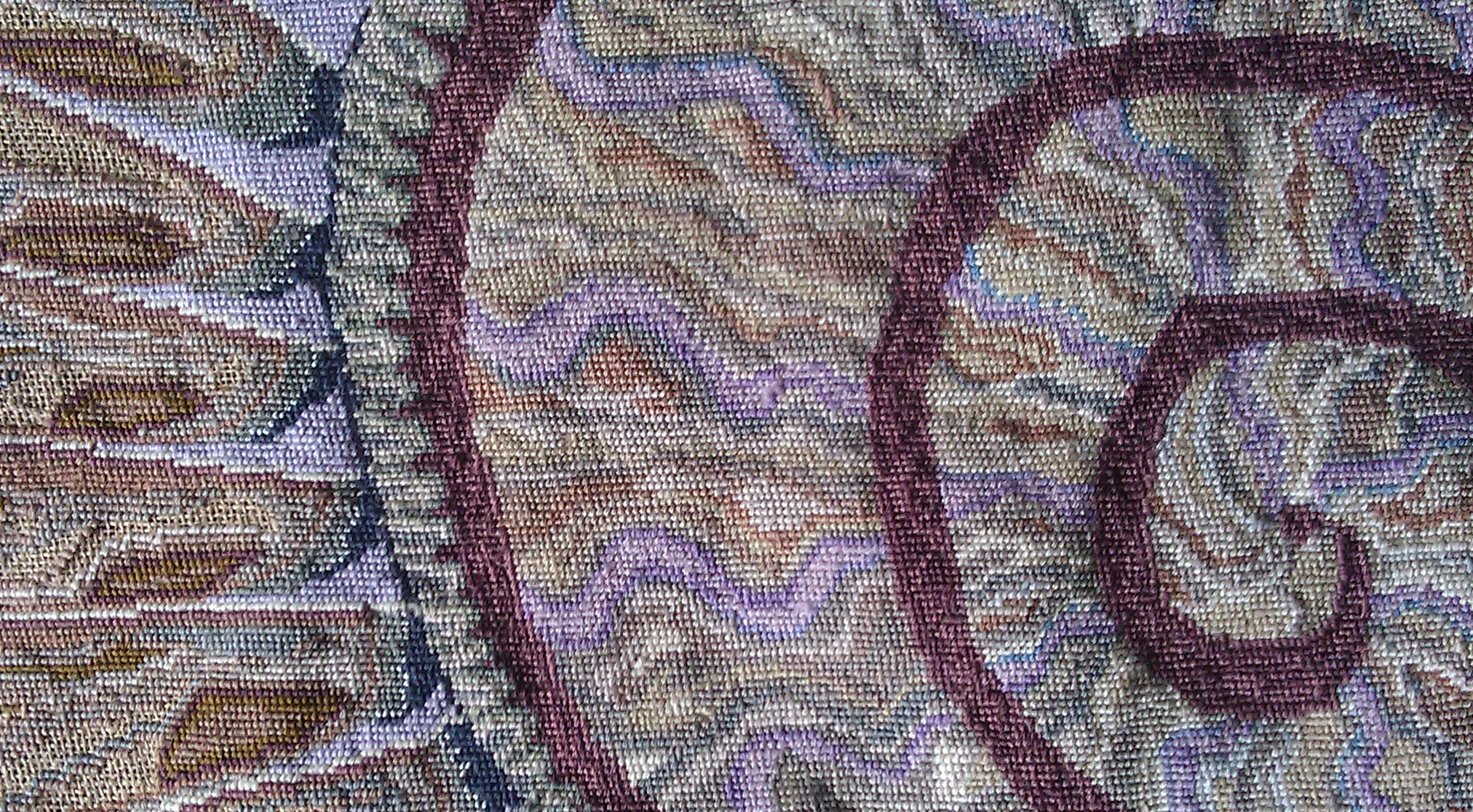
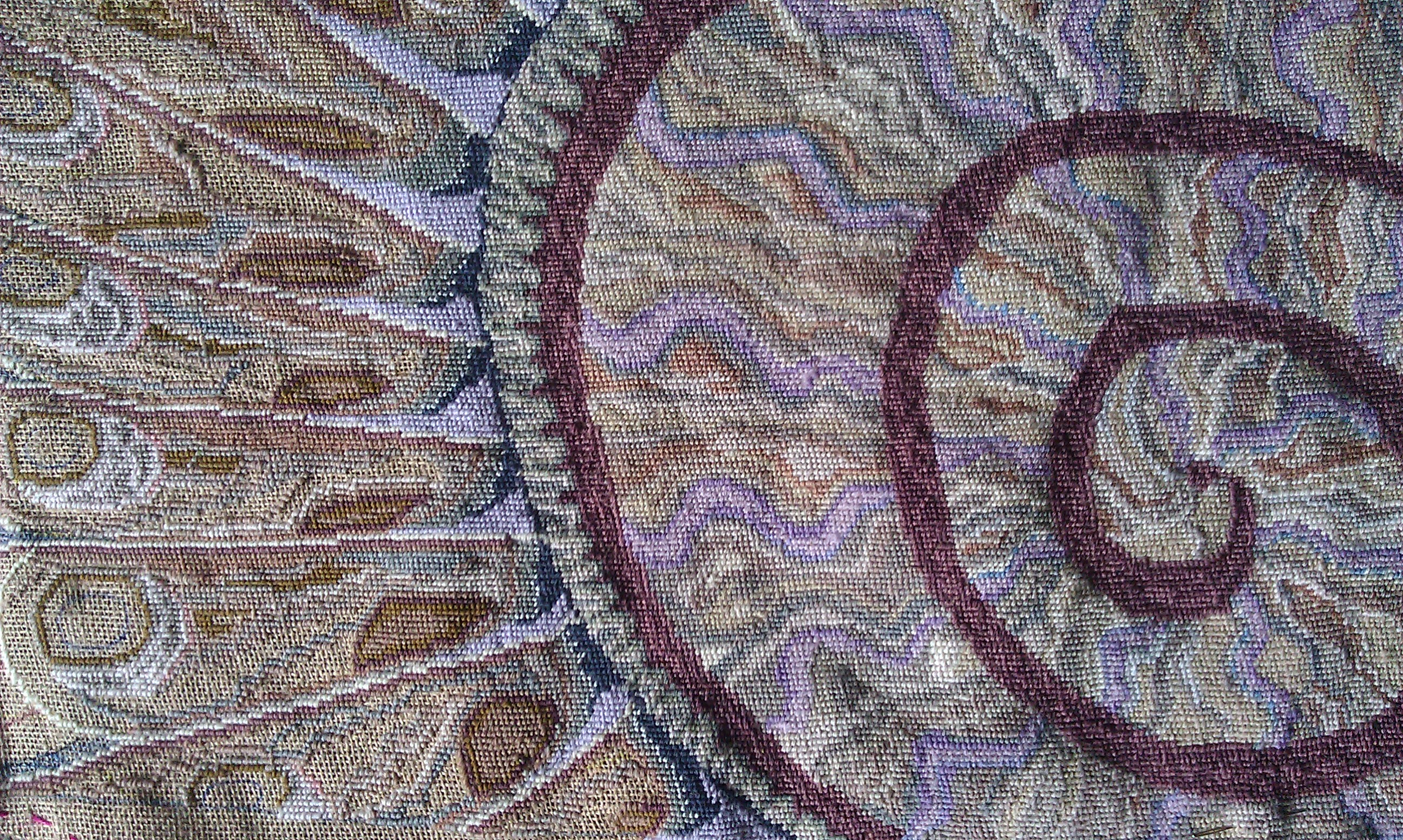
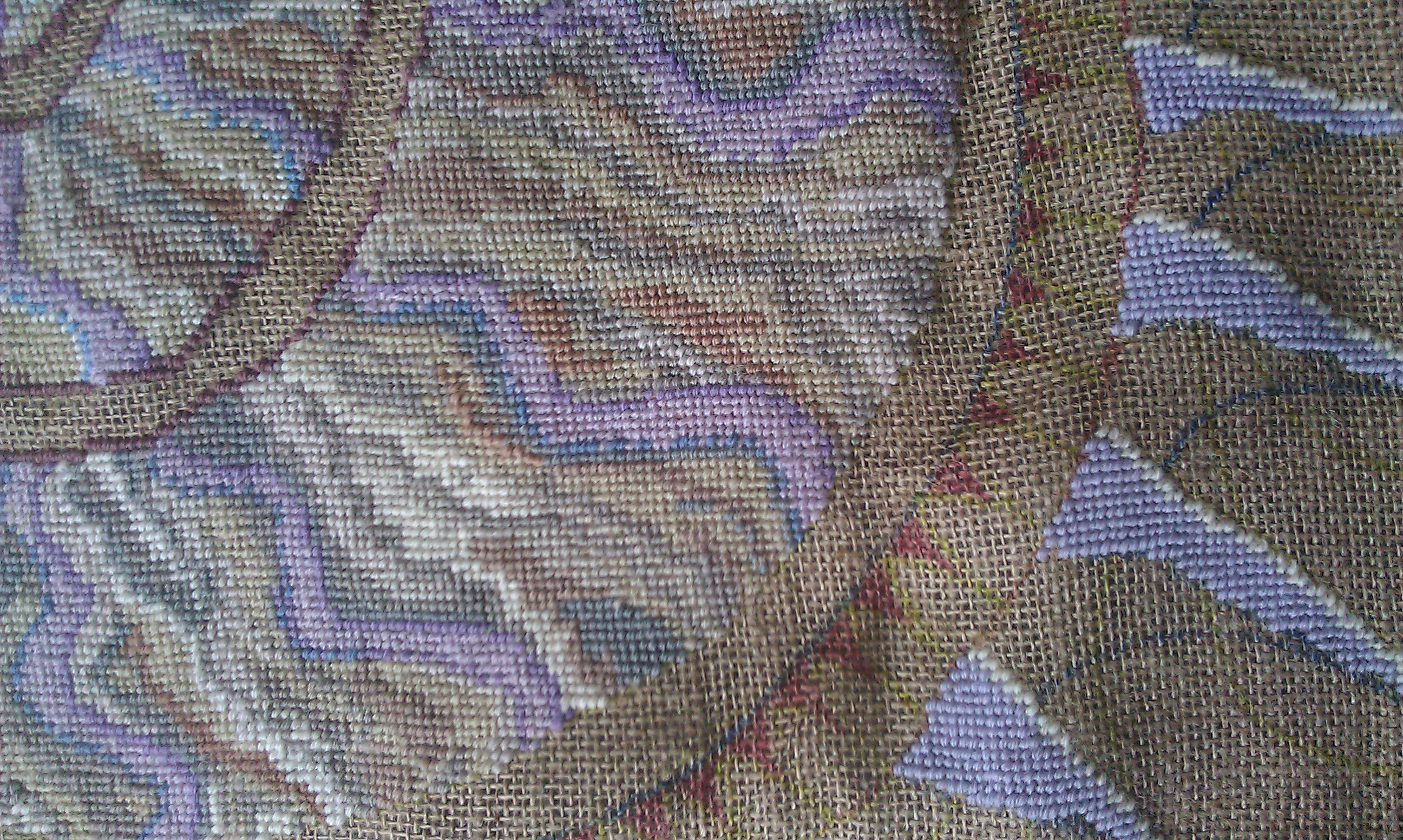
The finished piece is approximately 13.5 inches square. I had a quick look at calculating the number of stitches that have gone into it, – not something I normally do, but this was the smallest gauge I’ve ever needlepointed, and I was fascinated to know. The answer – give or take a few, is 72,900.
I started it at around the 8th of September and finished on the 11th October – so about a month. Not as bad as I thought it might be at the outset.
I’m telling you all this, because if I’m honest, although I liked the material, I was hugely daunted by the tiny holes when I began this, and I thought I might just call it an experiment. But having got into it, I’m not feeling nearly so negative.
The biggest downside, is that it really needs working in quite fine wools or silks, and my stock is mostly tapestry wools – too thick for the scrim. A good excuse for some more thread sourcing!
So, I think I can say it’s a thumbs-up for the linen scrim. I desperately need to find some new neutral colours to work in – I’ve realised that the stone texture piece won’t work with the palette I currently have available. I’m optimistic that I’ll find something suitable in knitting wool, but that will exclude the possibility of using the scrim.
Sounds like I have a bit of homework/shopping to do – could be worse – just don’t go telling anyone – please.
Some of you might know that the other great love in my life after needlepoint, is visiting historic places. (I generally write about that from time to time on my other blog – Mostly Motley).
What practically makes me drool with excitement, is when I get to combine both passions.
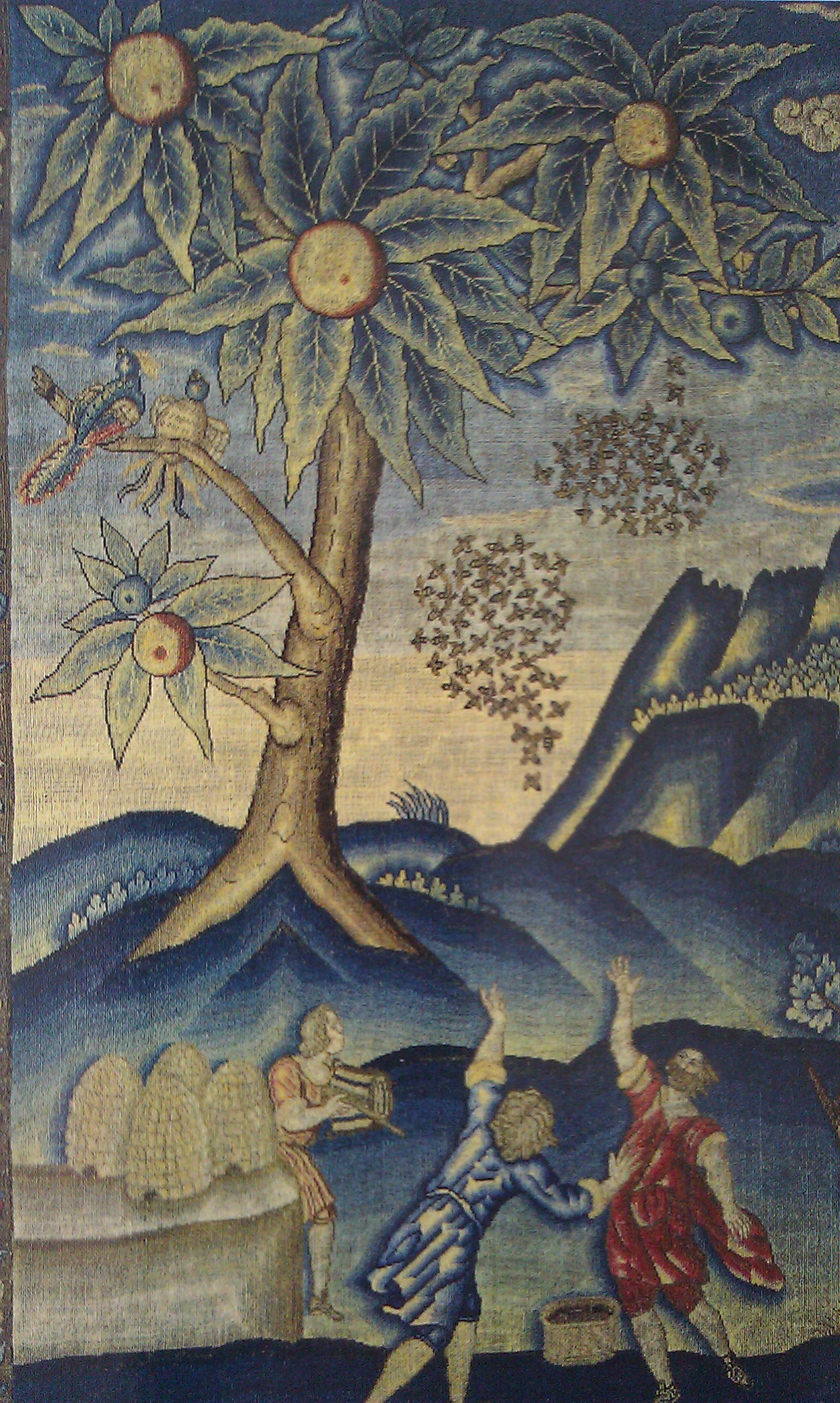
Wondering around the house in the languid way I do these days (so much less stressful now the girls are old enough not to need supervising), I came across a simply amazing 6 panel needlepoint screen, in a room called – for no reason I could find out – The Pigeon Hole.
detail from the needlepoint screen
It’s a good job that my daughters now make their own way around these historic houses, because my habit of spending long minutes, peering intently at the stitching, is guaranteed to cause them huge embarrassment. Naturally I had a really good look at the panels and what overwhelmed me, was the sheer size and detail of the work and the tiny stitches with which it was constructed (petit point).
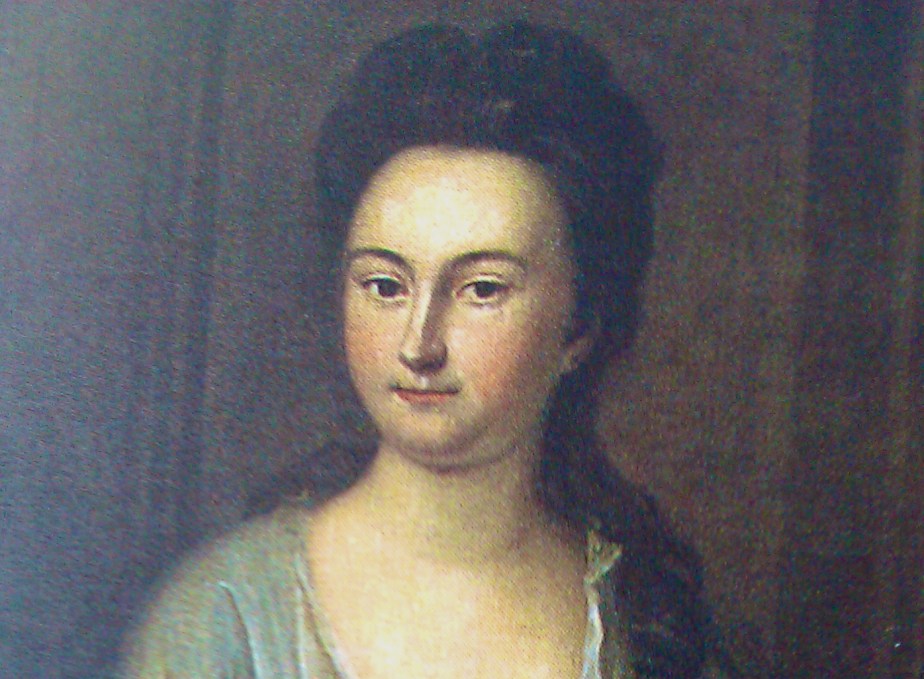
I’d rashly assumed that it was something purchased by the family for the house, but the lovely Room Guide pointed out a small portrait of a rather beautiful lady, called Julia Blackett, who I was told, had stitched the screen herself in 1727. The link to that portrait is here if you want to take a look.
According to the guide-book, the screen, which is worked in fine wool, was inspired by Wenceslaus Hollar’s 1663 edition of the Georgics and Eclogues of the poet Virgil. I’ll have to take their word on that, my classics education didn’t stretch that far, but I can’t help wondering about the thought process of Julia when she decided to create the work. Was she a scholar? Was this popular reading in seventeenth and eighteenth century aristocratic circles? Would the people who saw the screen, have understood what it was saying?
Then I wonder how she went about planning it. Did she have drawings? Did she create the drawings herself, or was there a market in needlepoint kits back then? How did she get the wool? Who supplied it? She certainly couldn’t order online!
Of course most people would assume that she had plenty of time on her hands to actually do the sewing, but I wonder about that too. It’s all very well in good daylight, but it must have been nigh on impossible to see well enough at night – have you ever done any fine work by candlelight? I suppose there must be a suspicion that she didn’t do it alone – if that’s true, I wish we knew a lot more about who the other women (I’m assuming it would have been ladies?) were.
I’d love to know more, because this is really what gets me so excited when I find old needlework. It’s the sense of connection with the individual whose fingers held the cloth and plied the needle, for hours and hours and many long hours. When we make pieces of needlework, we put something of ourselves into it – and in some way, that essence reaches out from the work.
I wonder if this is to some extent why historic quilts are so evocative – it’s a similar connection between the lives of people from the past and those going through the same process today.
Anyway, you can imagine, seeing Julia’s work made my day.
But then, just a few steps down the corridor, I came to the Needlework Room!
What a shock – it turns out that Julia had done far more than just the screen. The Needlework Room contains ten long needlepoint (tent stitch) panels, with an oriental theme – exotic birds and flowers. Annoyingly, I didn’t have my camera, so below are a couple of links to show the work.
And if you go here, you can see more of the panels There are beautiful almost matching chairs in the room too – you can just see them in the second picture, but they aren’t actually attributed to Julia.
Apparently, she made all these over a period of three years in the 1710’s, for the Drawing Room of her home in Esholt, near Bradford. It was her son, Sir Walter Calverley Blackett, who had the needlework brought to Wallington in 1755, when he sold the Bradford property. I’m so pleased that he was proud enough of his mother’s work to preserve it in his new family home, creating a room especially to show it.
I’ve tried to find out a little more about Julia Blackett, but she remains elusive. We have a couple of portraits and we have her needlework and we know that she was born in 1686 and died in 1736 – that’s it. Wouldn’t it be wonderful if somewhere in the family archive, there were letters or diaries that could tell us more. In the absence though, we can look at her work and let our imaginations soar.
Julia Blackett, Lady Calverley (1686 – 1736)
Julia Blackett – needlepoint heroine.
Thanks to the photographers on Flickr who posted the pictures.
My non-stitchy blog is Mostly Motley – it’s a fairly random affair.
Wallington has loads more lovely and fascinating things to see – do go if you’re in the area.
This post is by way of a ‘thank-you’ to several people and companies who’ve helped me out over the last few weeks.
If you’ve been following my stitchy ramblings, you’ll know that I’ve recently started needlepointing on a piece of linen scrim (scrim supplied by MacCulloch & Wallis – thank you).
It was a bit of a shock to the system after all the hessian I’ve used over the early part of this year, but with a lovely texture that quickly had me hooked.
But… those tiny holes…
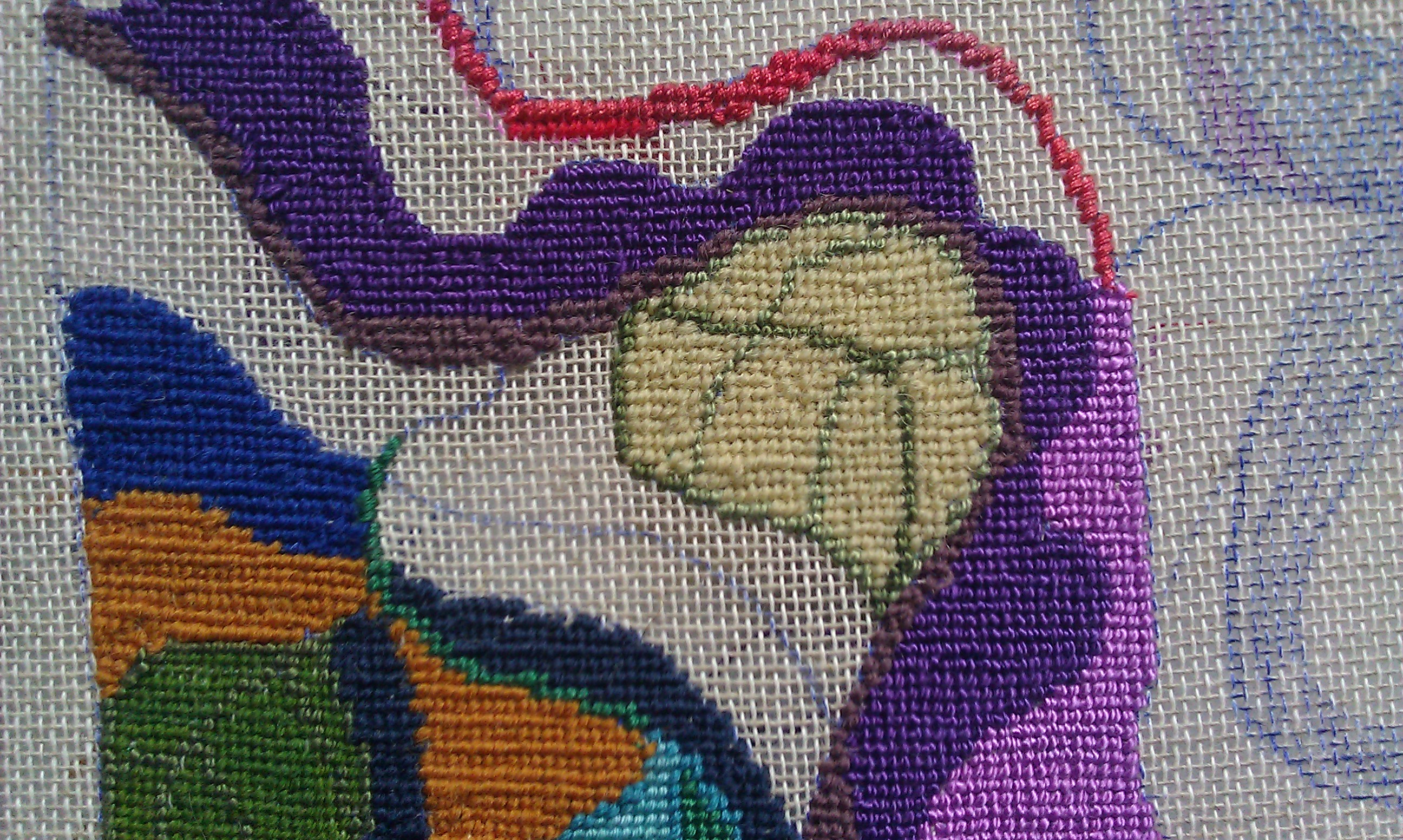
It’s not the number of them that’s the issue, it’s seeing them – they are sooooo small! In anything less than brilliant daylight, I’ve been struggling to stick the needle anywhere near its proper destination.
The problem is so much more difficult in the outer corners of the design, where not only am I trying to find the holes, but it’s impossible to keep the frame steady without growing an additional arm or two.
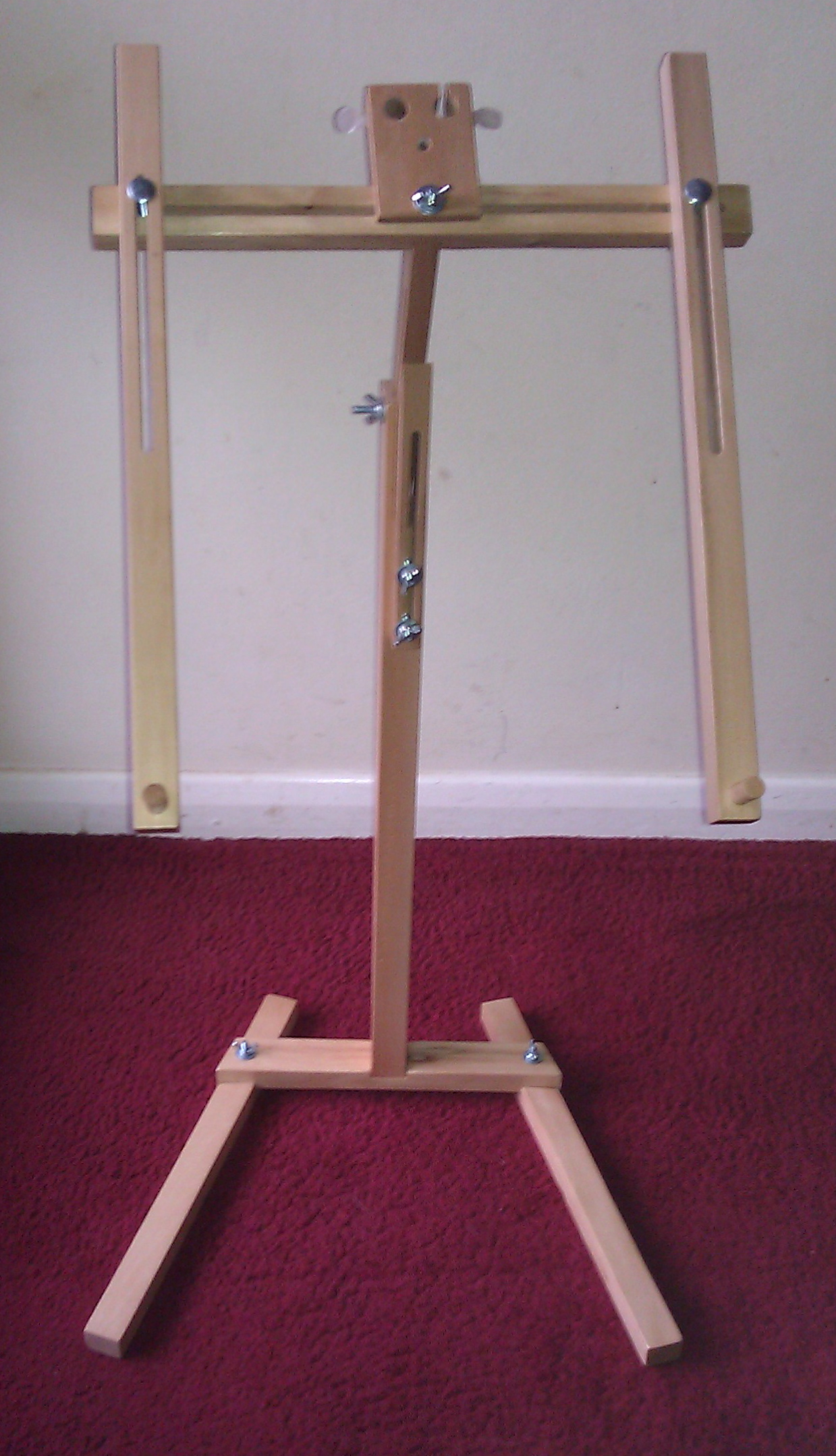
I’m not a natural with frames, but the last 12 months or so has seen me experimenting with a variety of different ones, but the idea of having a floor stand – well, that was revolutionary. It also brought on a touch of image consciousness. Am I the only needlepointaholic who has to deflect jokes about it being something medieval ladies did in the solar… a floor stand would surely do nothing to bring needlepoint into the 21st century.
But faced with the alternative of a twisted shoulder and impending blindness, what was I to do? I took Janet’s advice and bought a floor stand.
IT’S BRILLIANT!(thank-you Janet, – and a huge thank-you to Theresa at Stitchaholicswho somehow contrived to have the frame with me less than 24 hours after I ordered it – wow.)
Stitchmaster wooden floor stand – oh joy!
I didn’t order the light or magnifier – I thought I’d try the frame out for a few days first, to see if we’d be friends.
Having both hands free is liberating – who cares if I look as if I should wear a wimple.
But I still needed to shine light into those dark corners.
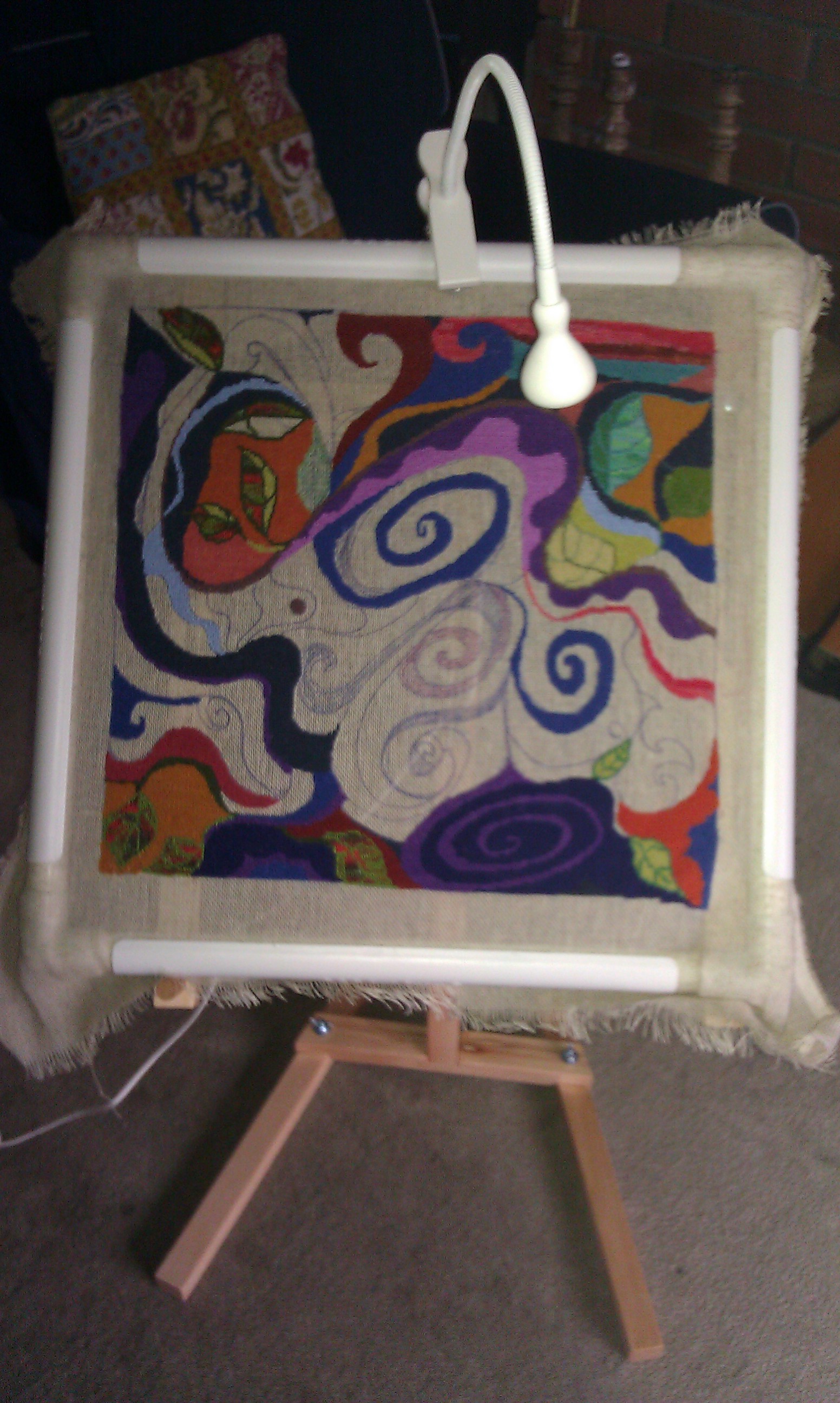
We had an old clip on lamp from IKEA that I thought would do the trick and it probably would have, if we hadn’t managed somewhere along the way, to lose the transformer it plugs into. The husband thought it would be quicker and cheaper to go and buy a new lamp, so off I went to IKEA…(I don’t normally need asking twice if there’s the prospect of a trip to IKEA)
And so, here it is – a little JANSJO lamp (thank-you IKEA – £10) – just the job. Bright, flexible and lightweight. They come in some fabulous colours, but I played safe with white. Beats candles I suppose.
Have you ever visited ruined castles or very old manor houses, with window seats set into the walls? Well, I know exactly who sat in them and what they were doing.
So far, I don’t think I need the magnifier – the light is good enough, but we’ll see.
And finally, this is what the scrim piece looks like at the beginning of this week. Happy stitching.
Just when I thought I’d sorted out what I’d be doing for the next few weeks, along comes the delivery of linen scrim, and within no time at all, I’m diverted off on to another track.
I wanted to try the scrim, because although I adore the variable, loose weave of the hessian that I’ve been using, it is hairy and I think gives me a few issues with sneezing and sore hands.
Linen scrim seemed to be a useful alternative.
I quickly set up a piece on the 17″ frame – it felt as if it needed a frame – and put needle to the canvas.
getting started with the new linen scrim
The first thing that struck me, was that this scrim is going to take a lot of stitching – sooooo many stitches! (I estimate about 20 stitches per linear inch – 400 per square inch). I’m not afraid of working large or slow pieces, but this felt a touch daunting.
I estimate it’s taking about 400 tiny tent stitches per sq.inch
But once I’d experimented with different strands of wool/silk/cotton, I found I’d somehow become attached to it. I had originally thought I’d just do a few square inches to see how it worked, but now I’m sure I’ll carry on with it.
As with the hessian, I find that the softer canvas feels attractive to work on.
On the plus side of using the tiny gauge, I now have a good excuse to use some of the yarns I’ve been keeping from Stef Francis and Oliver Twists – yarns that would have been lost on a bigger gauge piece. I’ve also tried out some Anchor Perle cotton. It fascinates me how each different type of thread lies down in the canvas with its particular character.
So, a delay on progressing the stonework idea – but a bit of an education going on instead.
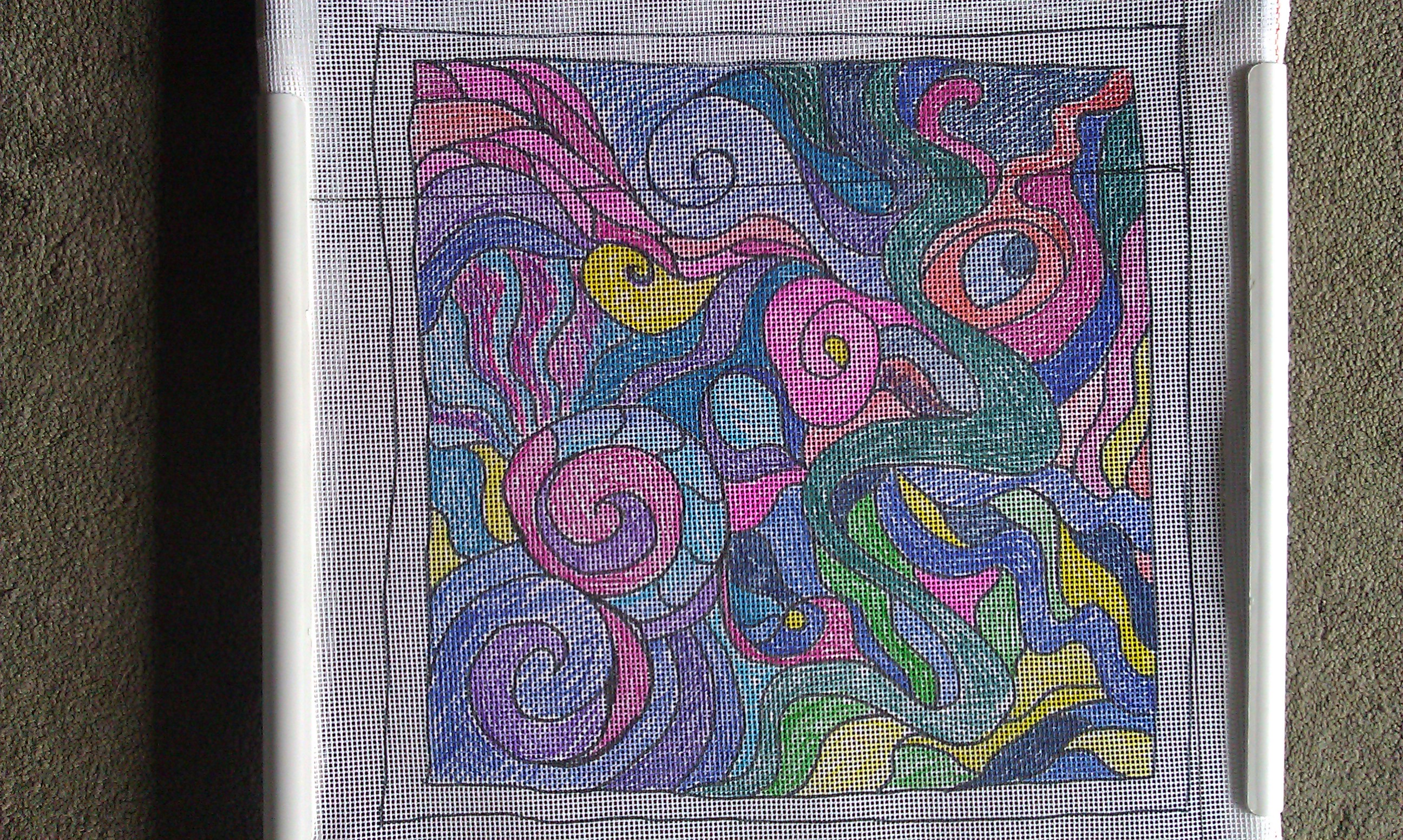
The piece inspired by stained glass – although as I’ve been stitching, I’ve had a decidedly underwater feeling.
I’m not sure that it’s quite so dark in real life, but the pictures taken with flash make it look very odd indeed – almost yellow, which it certainly isn’t. I don’t know, perhaps Father Christmas will put a nice shiny digital camera in my stocking this year?
I’m reasonably pleased with the way it’s turned out. The combination of silks and wools has given it the shimmer I wanted, to convey the way that light works through stained glass.
I could sit for hours in a church where the sunlight is casting rainbows across the stonework. True magic.
Today we start the packing for our trip to the far north of Scotland. Weather permitting, we’ll be away for a few weeks. I’m not taking canvas with me – I did last year and never got it out of the bag. Camping, wind, rain and cold I discovered, don’t lend themselves to happy stitching.
I am however, going to take my sketchbook. This will be a wonderful opportunity to get back to basics and start laying down some new ideas to work up in the autumn.
A mercifully uneventful week has meant good progress on Stained Glass.
I started by stitching in the ‘lead lines’, so that I’d have some structure to work into. I’ve learned from previous pieces, that trying too hard to put a lot of heavy lines doesn’t work well, so I’ve been a little more restrained this time and varied the colour too.
Then I began to fill in the shapes created by the lead lines. This feels a bit like stitching by numbers and is actually very relaxing.
But one of the things I love about old stained glass, is the imperfections in the glass itself, which create wonderful colour textures. I’ve tried to produce this effect in some of the sections.
Of course the other thing which appeals to me about stained glass, is the way that light plays through the glass, making some pieces glow, while others remain dull.
So it seems like the perfect excuse to add perles and silks into the tapestry. They catch the light so differently to wool, adding a tingle of translucency.
I’d say I was about half way now with this piece. With any luck I’ll finish it before we hit the road with our little tents and go on our Scottish Odyssey, timed – rather deliberately – to coincide with the Olympics.
I only ask, because every time I decide to try to be more organised, life seems to get in the way. Still, here I am, just to say that the Shell is now well and truly finished (that is to say I’ve put all the stitches in, framing is another question altogether).
And, as planned, I’ve already started on the new Stained Glass piece.
It feels a bit odd to be working on proper canvas again. I definitely don’t like the way it makes my eyes see strange patterns when I’ve been working on it for a while – although I suppose it is one way to remind myself to take regular breaks.
But the fact that it is small enough to fit a 17″ frame, means I have some prospect of completing it slightly faster than the last couple of pieces.
I seem to need a relaxation piece to work on while I stew my creative juices for another bigger work.
Little droplets of inspiration have been finding their way through the morass that is my brain, but they’ll need to stay there incubating for a while yet.
Having been so intensely working on The Shell piece lately, I missed reading some of the blogs I usually keep up to date with. But at the end of last week I went back to the wonderful Rima Staines’s blog – The Hermitage, and was bowled over by her post, The Alchemist.
I’m a big fan of Rima’s artwork and look forward to her posts, but in The Alchemist, I found myself thinking how close my own experience of transformation is, to that which Rima describes in the creation of her paintings. And I was especially taken by her use of the ribbons as threads of magical inspiration woven into a work and then taken up by others as a result of contact with the work.
This is incredibly resonant with the way I see the creation of tapestry pieces.
Not only are these works literally the weaving of threads, but in creating the pieces, we bring parts of ourself into the work too. Our moods, our feelings, our loves, are all incorporated. But these inspirations have originated through our response to other works of art or nature and so we are bound too within a web of creation.
Rima talks about the act of creation as nourishment to the soul and I have to say I heartily agree. When I’m immersed in my stitching, I’m in a deeply peaceful place, more than simply a relaxation, it is actually stimulating. Thoughts and ideas grow there. Indeed it is extremely nourishing, and probably the reason why having given in to the desire to sew, I now find myself feeling whole.
Who are we to know who will pick up a thread from our work, or what they will make of it? – it doesn’t really matter. The point is that we are all alchemists, all involved in transformations and all enriching the greater whole by pursuing our art.
A huge thank-you to Rima for expressing the magic of alchemy.
In which the shell inspired needlepoint heads for the finishing line and I start to think about the next piece.
Remember this?
I started trying out hessian as a needlepoint canvas, back in February. For the 10oz hessian, I sketched out a design roughly inspired be the shape and colour textures found in some shells.
Every large tapestry I work, goes through development stages. In the beginning, every stitch stands alone, putting just a small area of yarn into the canvas. The unstitched area vastly out measures the stitched sections.
Then, gradually, sometimes achingly slowly, patches of stitching start to acquire their own texture – they become something promising, firm, solid.
And then, if you are prepared to stick at it, there comes the delicious moment, when you realise that the piece has acquired a life of its own – it suddenly possesses its own energy and you know for sure that you will fill every square in the canvas and that when you do, it will have knitted together to make something strong.
It feels like a kind of alchemy that transforms simple strands of wool and weak loose canvas, into something that firm and resolute.
This is the stage of stitching I love the most. Every new stitch, binds the whole together more and more. I’m seized by an urgency to see what it will finally look like. I get grumpy if I can’t find time to put in the missing stitches and I start turning down visits to the pub so I can stay in and sew instead.
I’ve just reached that stage with the shell piece.
But…
You know what it’s like when you’ve been absorbed in a really good book and you can see that it’s coming to the end and although you want to know the ending, you also begin to wonder what you can possibly read next to fill the gap.
Well, I’ve found that with tapestry sewing, I need to have the next piece ready for me to start as soon as I finish the last one.
The shell is a big piece – roughly 45cm x 80cm – so the next one will be smaller. I need to have a rest from the big ones for a few weeks.
I’ve also decided to use up the white canvas, so I’ve spent the morning sketching out a new tapestry.
Stained glass continues to send trigger messages to my brain – I think that’s where this came from.
So I can see what I’ll be up to for the coming days.
Is it me? (Well, quite often I think it probably is), but I’m just asking, where do you make your art? Do you have a studio, or would you like to have one?
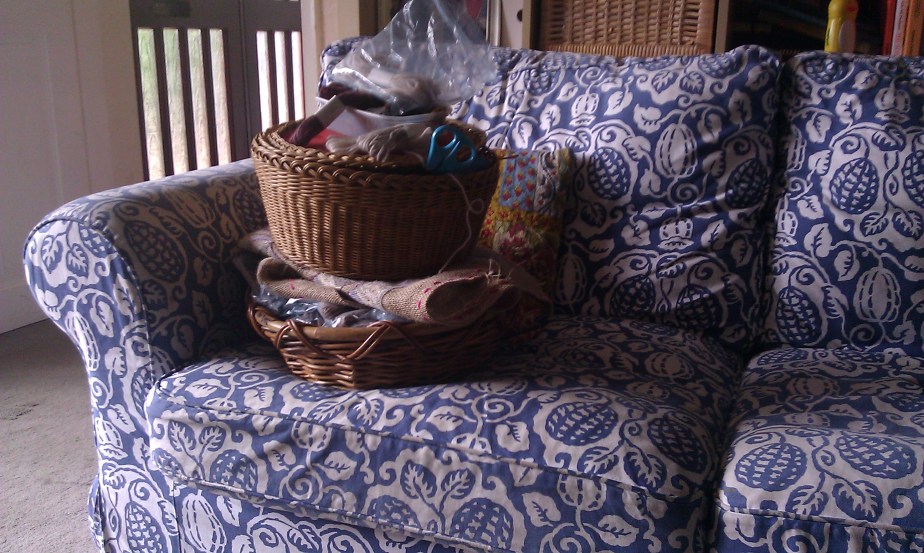
Making needlepoint artwork doesn’t really lend itself to the traditional studio. I do most of my stitching, sitting or lying on the sofa. I move around quite a lot, depending on whether I’m using a frame or not and how big the piece is that I’m working.
I quite often sit with my legs up on the sofa, using my knees as a kind of frame – but it really depends on where on the canvas I’m sewing.
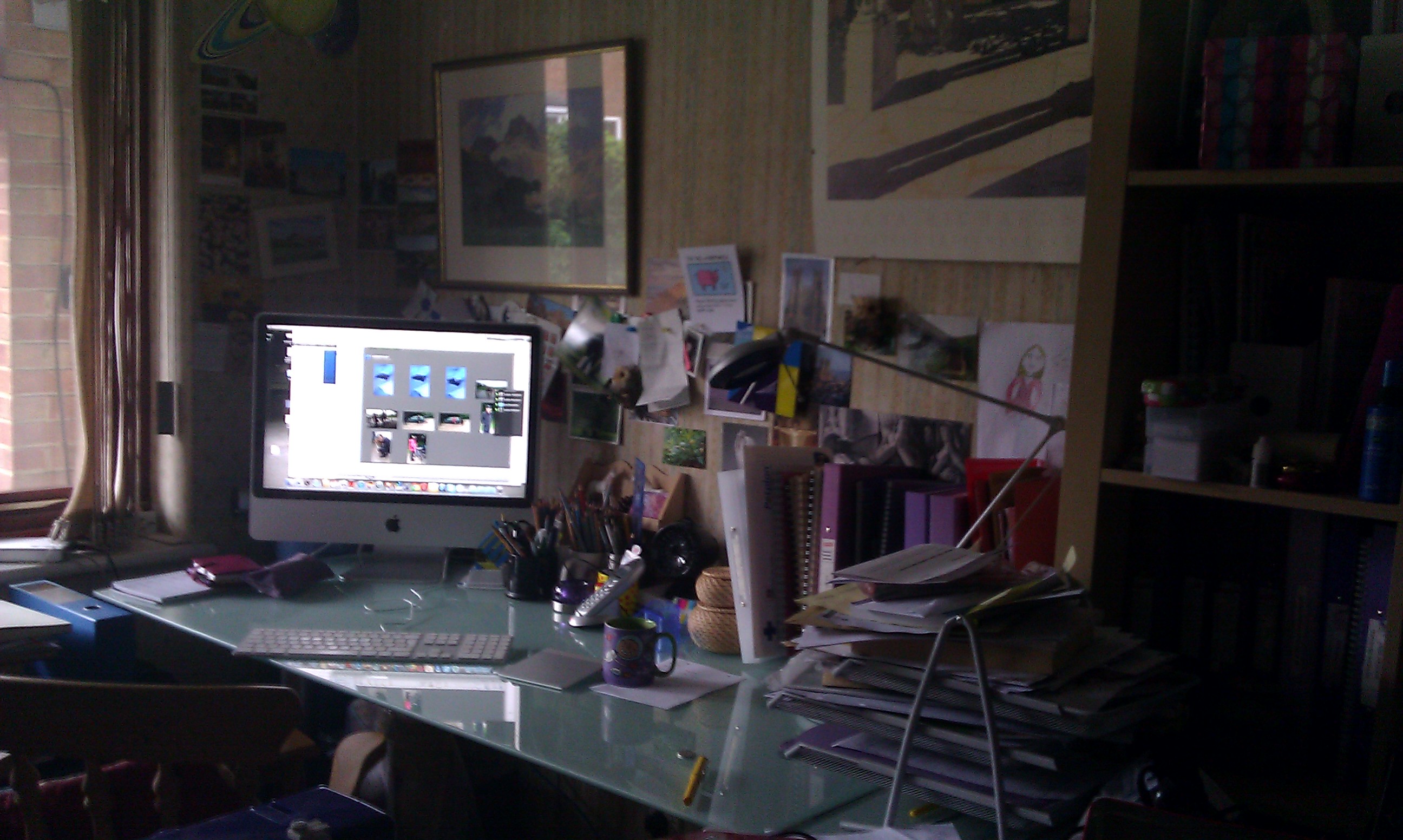
My real workspace (I know it looks like a sofa…)
I do have a big floor frame, which my dad made for me years ago, but I rarely use it. I don’t like bending my neck over, and I just feel more comfortable sitting somewhere soft and comfortable.
Oh and the other thing is, I like to work where it’s warm – I go quite cold sometimes, so I prefer to work where the heating is on, or in the window if the sun is shining.
But all that being said, I just love looking at other people’s studios. It feels a bit naughty, a touch of the voyeuristic, but it’s so exciting to see how other people organise their working areas.
Some seem very utilitarian, others are more a work of art in their own right. There are even magazines that feature artists’ studios – (although I haven’t yet resorted to buying them).
Our local area is having an open studio month – you can drive around and go in to see where artists are working – but could I go? Would it feel as if I was snooping? Would it be like those people who visit houses for sale, just to see what they are like inside and with no intention to buy?
I’m especially intrigued by textile artists’ studios. These seem to be a deliciously guilty mix of art studio and sewing room.
So to all of you who publish pictures of your work space – THANK YOU. It’s inspirational, but I can’t quite work out why or how – it just is.
Oh, you know how it is, the sun comes out, you get a good book to read, you buy a new dog…
Well, it’s been like that around here lately, which is why I’ve been away for a few days. Actually I’ve been going through the process of getting the house ready and then settling in the gorgeous new blond man in my life – what a sweetie he’s being too.
The sun has barely popped its head behind a cloud for at least a week now, which is of course wonderful, but a bit of a shock to the system. Although I should warn any of you living around here, that I went and stocked up on sun lotion yesterday, which is normally more effective at bringing a heat wave to a halt, than appointing Denis Howell as Minister for Drought.
As for the good read – I’m delighted to have found I’d Rather Be In The Studio, by Alyson B Stanfield. I tried VERY hard to find a hard copy – I am after all one of those dreadful scrawlers in books – but short of paying well over £30 and waiting for the vagaries of shipping from the US, there was no option but to buy the Kindle version.
Although I can’t cover the pages with pencil, I’ve found myself taking notes, which knowing the way my old brain works, might actually be more effective – time will tell.
It’s a book for artists who want to get serious about promoting their art. Being involved in the very slow art world of needlepoint and tapestry, it’s terribly easy to let things slide, putting off deadlines and thinking that everything will happen in the future by some strange turn of fate.
When I was living in the corporate world, I was really good at goals and deadlines – now I’m being motivated to set up those routines again and see what I can achieve.
So, hello again. And now it’s off to the studio (ok, sitting room) for me.
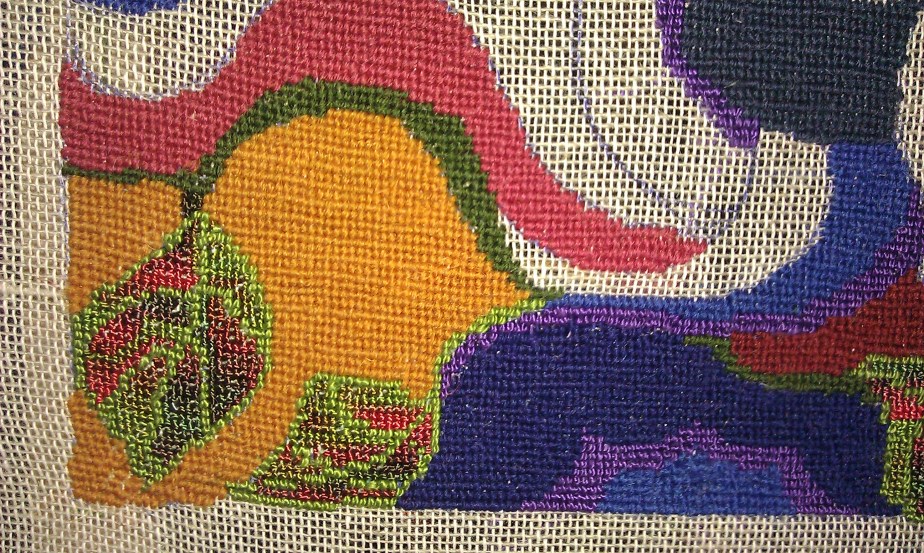
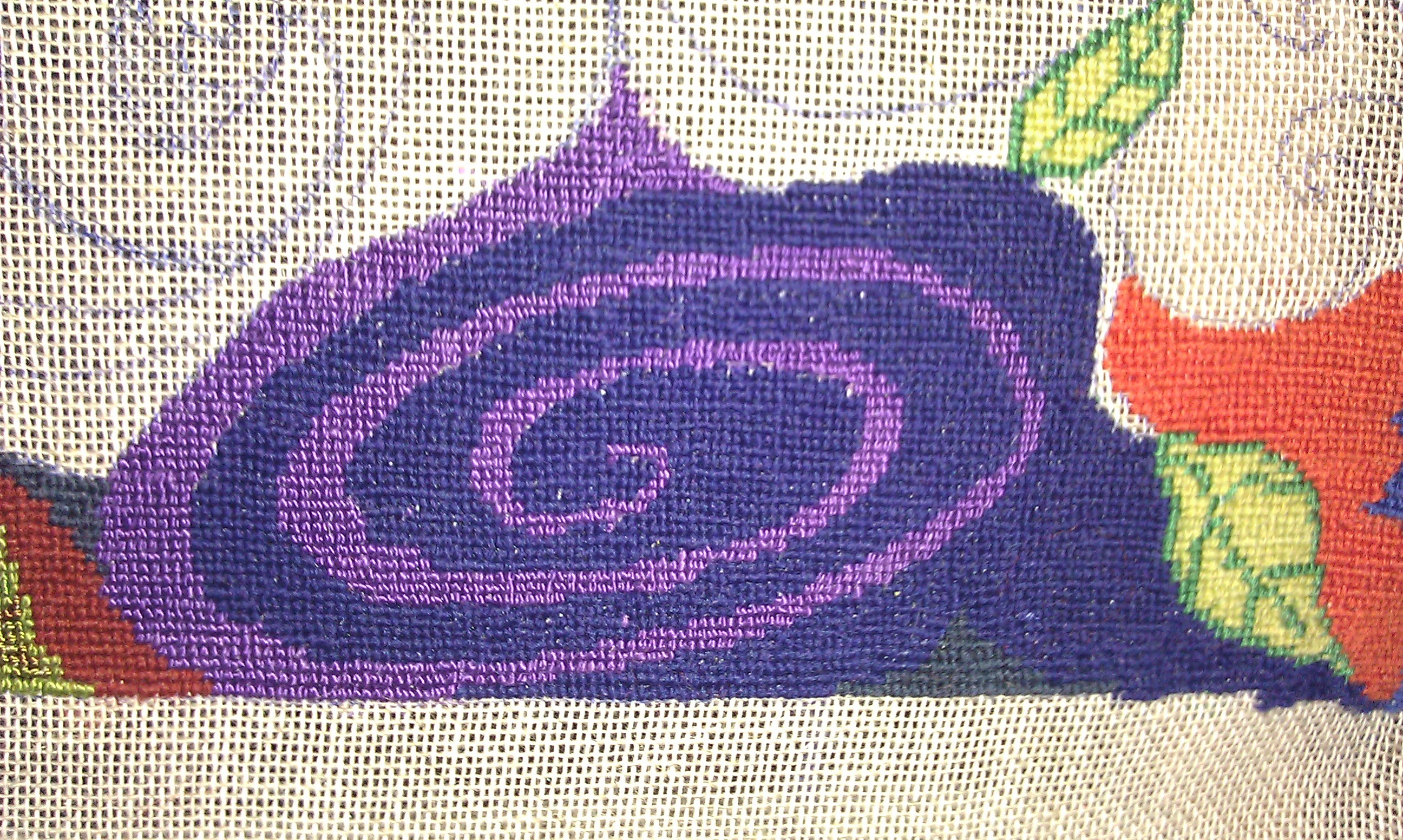
This is the 10oz hessian, with a considerably tighter weave than the 7.5oz, although still soft and quite variable. I don’t know what it is about working on this material, it certainly has its frustrations, but I really like it – perhaps it’s the drapier texture, I’m still not sure. Perhaps it’s because it’s irregular, and that appeals to the bit of me that doesn’t like to play by the rules. Anyhow, I’ve picked up The Shell again and am making some progress on it. I think I may have mentioned before that this is not my normal palette, and I’m finding out about these more subtle colours as I go along, but it makes a change, and as I’m currently brooding on developing a stained glass inspired piece, this one is keeping all those glorious exuberant shades under control until I’m ready to let them loose.












 Dreaming In Stitches